Overview
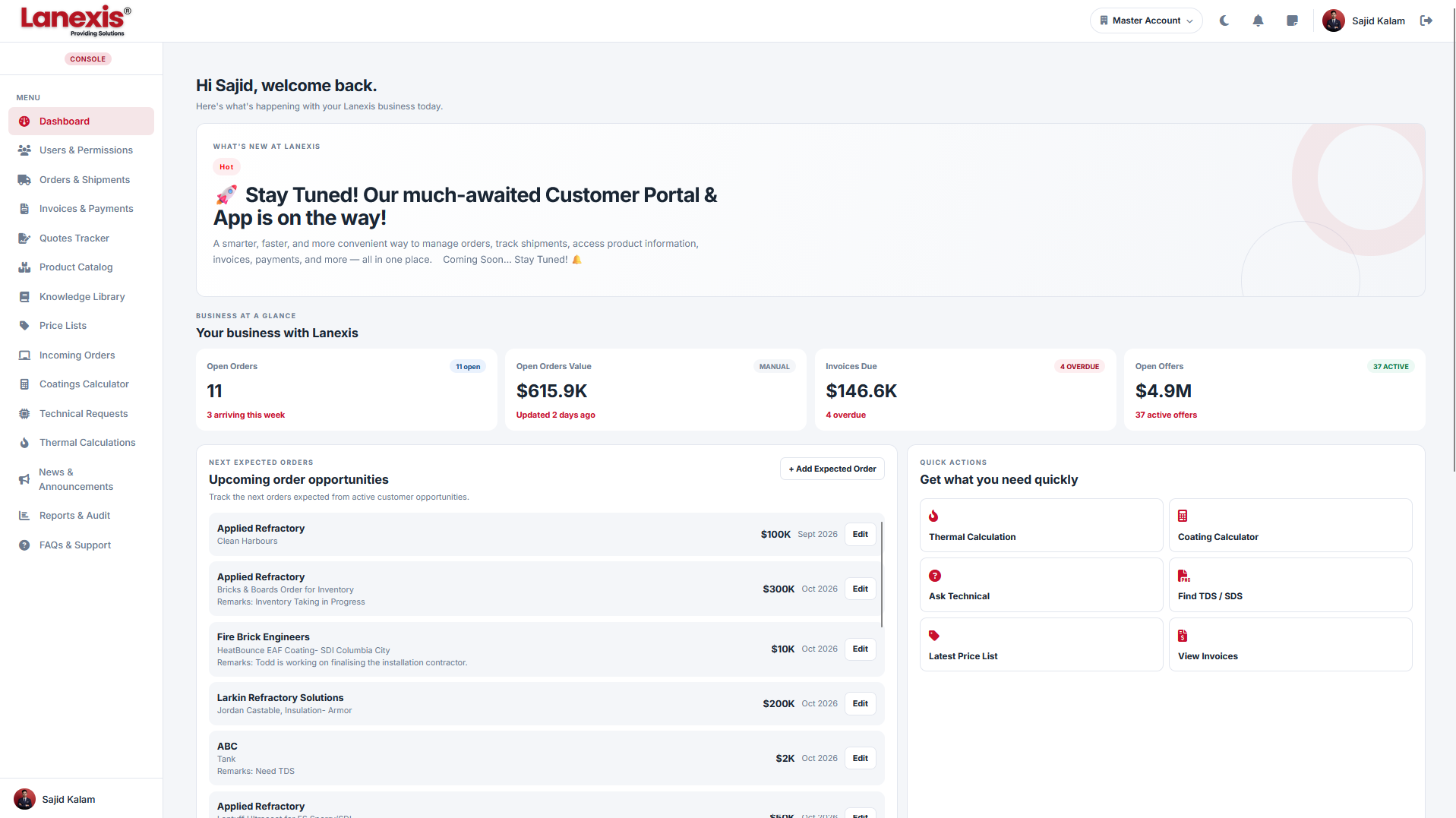
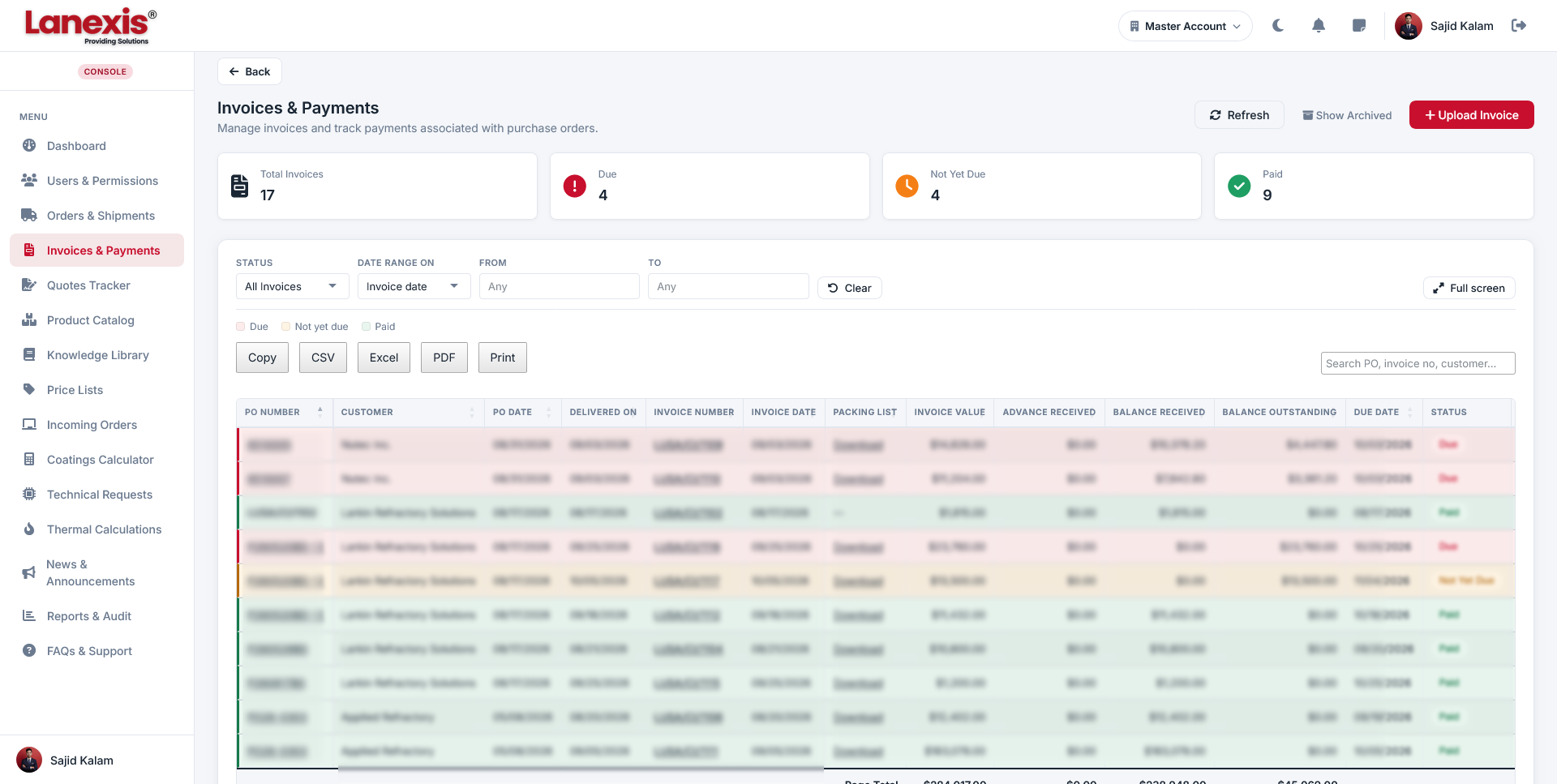
Lanexis needed one place to manage users, projects, dashboards, reporting, notifications, and order and shipment information that lived in internal spreadsheets.
I led the project from requirements to production: system design, backend and mobile development, the Google Sheets integration, audit tracking, AWS deployment, and client consultation throughout.
My contributions
- Planned the product and translated client requirements into technical workflows.
- Designed the application architecture and major system components.
- Developed backend functionality with Django and Django REST Framework.
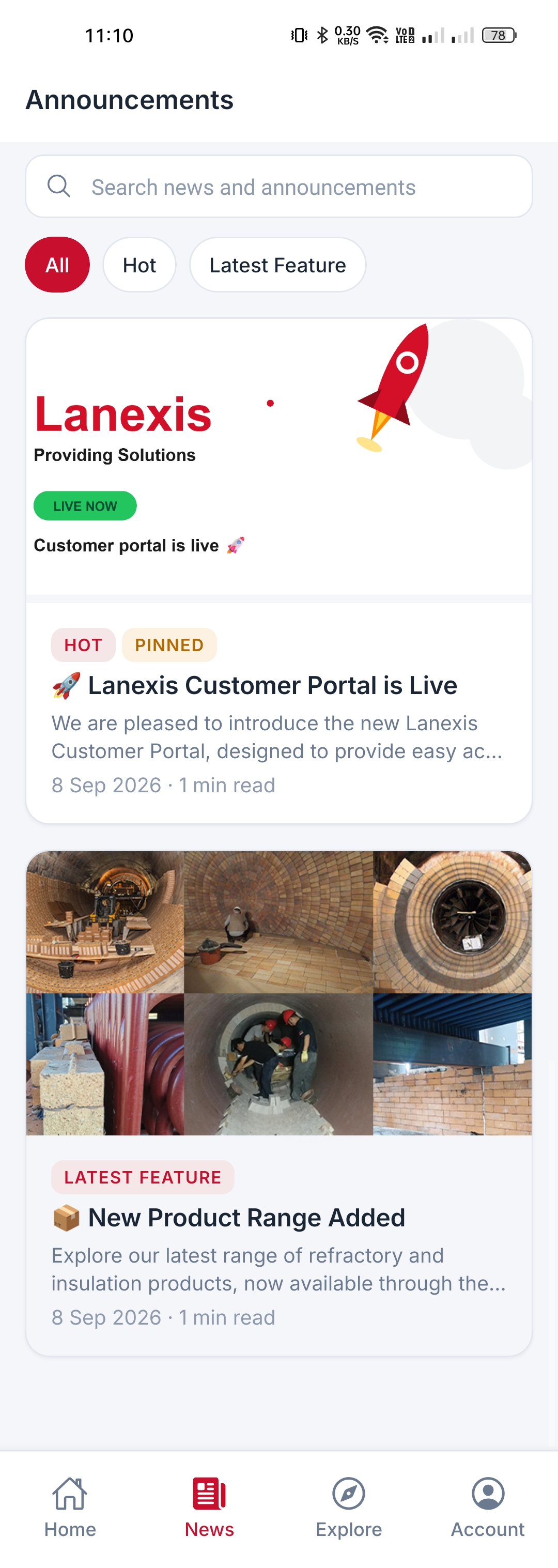
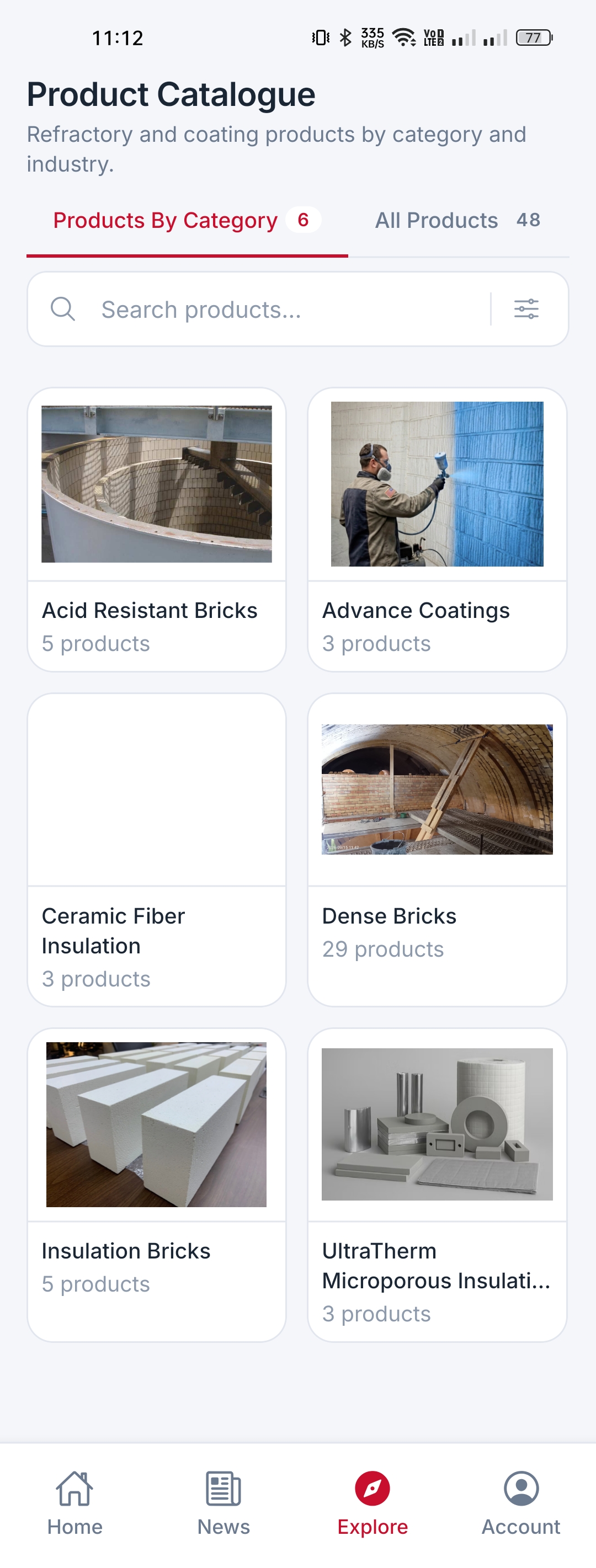
- Worked on the React Native / Expo mobile application.
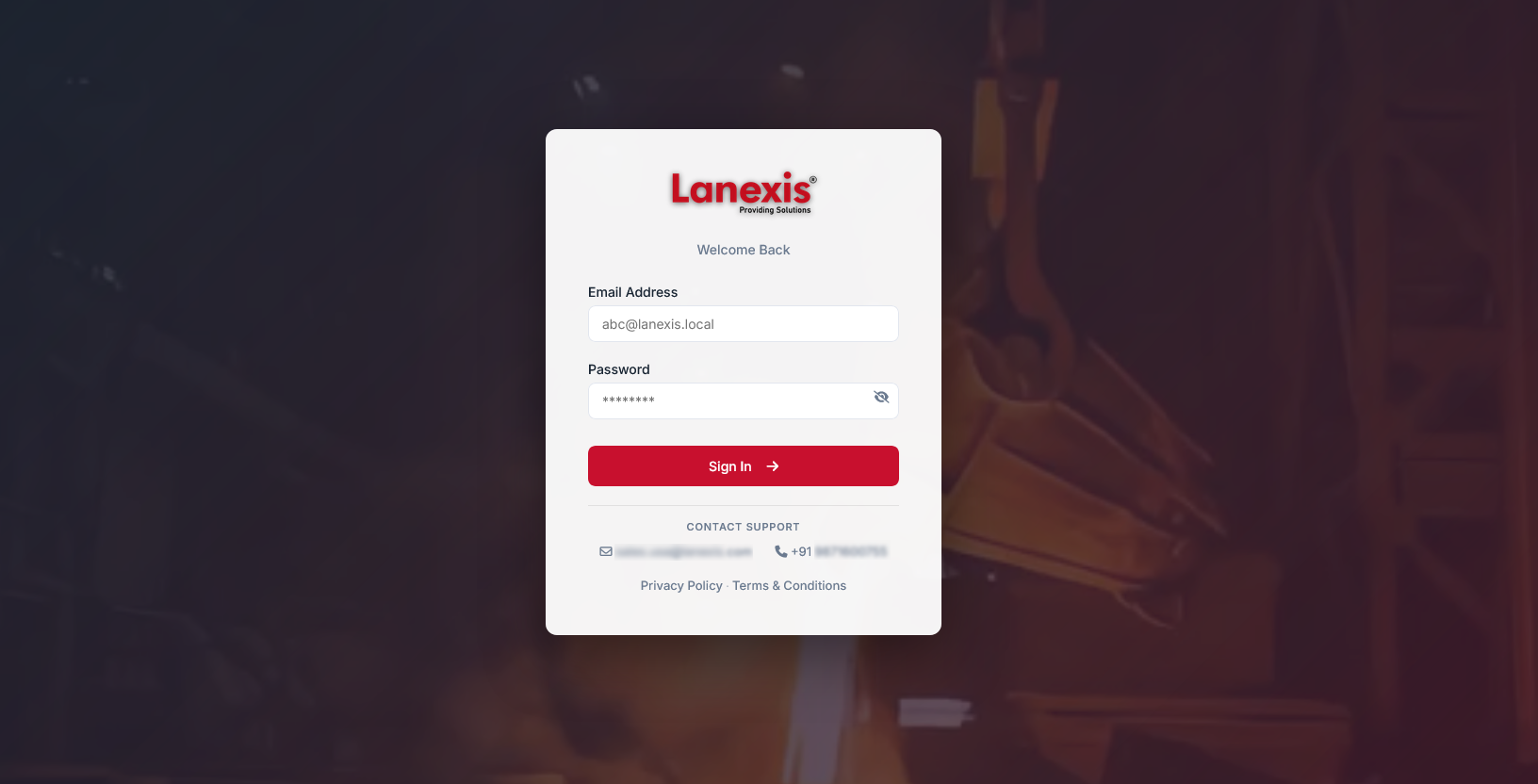
- Implemented authentication and role-based access control.
- Developed project management, dashboards, reporting, and notification functionality.
- Integrated the Google Sheets API for manual synchronization of order and shipment data.
- Implemented audit tracking for logins and create, update, and delete activity.
- Managed AWS deployment using EC2, RDS/PostgreSQL, and S3, with Nginx and Gunicorn.
- Handled client communication, requirements clarification, technical consultation, and delivery planning.
The problem
Lanexis kept operational information including order and shipment data in internal company Google Sheets. Customers and staff needed controlled access to the right slice of that information, together with project management, dashboards, reporting, and notifications, without anyone working directly inside the internal spreadsheets.
The goal was a single business portal that fit how the company already worked, rather than one that forced it to abandon its existing tools.
At a glance
- Authentication & role-based access
- Project management
- Dashboards & reporting
- Multi-channel notifications
- Order & shipment information
- Google Sheets API manual sync
- Audit tracking: logins, creates, updates, deletes
- AWS deployment: EC2, RDS, S3
Architecture overview
The confirmed production stack, from users to infrastructure.
7 layers · select a layer for details
-
Users Business users
Administrators, staff, customers, and other authorized users.
- Admins
- Staff
- Customers
-
Clients Web portal & mobile app
A web portal and a React Native / Expo mobile application.
- Web portal
- React Native
- Expo
-
Application Django + Django REST Framework
Authentication, authorization, business logic, reporting, notifications, and integrations.
- Django
- DRF
- RBAC
- Audit tracking
-
Integration Google Sheets API
Manual synchronization of order and shipment information from internal company spreadsheets.
- Google Sheets API
- Manual sync
-
Data AWS RDS · PostgreSQL
Managed relational database for application data.
- PostgreSQL
- RDS
-
Storage AWS S3
Object storage for application files.
- S3
-
Hosting AWS EC2 · Nginx · Gunicorn
Nginx as the web server and reverse proxy in front of Gunicorn running the Django application.
- EC2
- Nginx
- Gunicorn
Integrating Google Sheets
The client's source of truth for orders and shipments was a set of internal Google Sheets. I integrated the Google Sheets API into the Django backend and implemented a manual synchronization workflow that retrieves order and shipment information and brings it into the portal's business workflows.
The integration is deliberately described as manual synchronization, not real-time: data is brought into the portal when a sync is run, rather than on every spreadsheet edit.
Access, roles, and audit tracking
The portal serves administrators, staff, customers, and other authorized users, each with access appropriate to their role. Authentication and role-based access control are built into the backend.
Key activity is recorded for traceability including logins and create, update, and delete operations so administrators can review what happened and when.
Notifications
The platform supports multi-channel notification workflows that keep users informed of relevant updates across the portal.
Deployment and infrastructure
I planned and managed the production deployment of the Django application on AWS:
- EC2 for application hosting
- RDS (PostgreSQL) as the managed relational database
- S3 for object storage
- Nginx as the web server and reverse proxy
- Gunicorn as the application server running Django
Working with the client
I was the primary technical point of contact throughout: clarifying requirements, translating business needs into application workflows, advising on technical options, and planning delivery. Owning both the conversations and the code meant decisions could be made with the whole system in view.
Engineering takeaways
- Own the lifecycle. Carrying a project from the first requirements conversation to the production server changes how you design deployment, access control, and auditing become part of the plan, not afterthoughts.
- Fit existing workflows. Integrating with the spreadsheets the business already relied on, instead of replacing them, let the portal slot into how the company worked.
- Design traceability in early. Audit tracking and role-based access are far easier to build in from the start than to retrofit.
Gallery